Sixth page of the archive

Cultural Voyeurs

At the Laboratory, we tend to be cultural voyeurs. This means we nurture our curiosity about ANYTHING, or as French writer George Perec recommended “we question our teaspoons”. Similar to a daily full body workout routine, we collect all sorts of things (artefacts, social practices, cultural trends), their amplitudes, cultures and frequency into a kind of “grab-bag” made of references examples. When properly named, described and organized, these signals become stimuli or starting points for extrapolation as part of our Design Fiction process.

Source: Seldom Dispatch #6 from the Near Future Laboratory

Four Hours of Knowledge Work

For the last few months I’ve been organizing my days—but more importantly setting my expectations of a day—differently. It’s based on a few articles I’ve read over the years and since I keep having to pull the articles out of my notes to send them to people, I thought I’d collect them here and have one link to use. Since a lot (most) of my work is reading, thinking, and writing, it’s pretty hard to be focused deeply on those kinds of activities for a full eight hours. For a few years I worked 90 minute “sprints” with breaks in between. It was usually one block in a café somewhere, a break to walk back to the home office, sometimes running an errand or two. So on average a 30 minute break. Then another 90 minute block before breaking for lunch. Then block, break, block; about an hour of buffer or extended work; end of day. It was largely built on this article by Mikael Cho, the research he refers to, and observing my own energy and ability to concentrate.

Work no more than four 90-minute sprints per day. Your mind was not meant to run for 8, 10, or 12 hours straight. Break your day into chunks and in between your work, eat, go for a walk, workout, or just sit and do nothing.

To set priorities, around the same time I started using (and still do) the Ivy Lee method. Which is basically that at the end of the day you pick the few most important tasks you’ll do the next day. I usually pick 3-4 and list them in a file independent of my task manager. Last spring I re-read Doug Belshaw’s post, My daily routine. He covers a lot more but this is the part which stuck with me:

I work for two hours in the morning and two hours in the afternoon. By ‘work’, I mean write, think, plan, and make. I don’t count meetings and replying to email as work. While it’s important for me to meet people online, especially as I live up in Northumberland, I limit these conversations to 30 minutes wherever possible. My time is precious. Four hours of solid knowledge work is what I aim for each day as research backs up my theory that this is optimal.

Check out the two links in the quote and there’s also this one by Oliver Burkeman with multiple examples of writers who used some variation of the four hour work day. Granted, as a consultant you can’t really “just” work four hours, which is why Doug’s emphasis on solid knowledge work resonated with me. You can do additional lighter work, like email and meetings, at other times in the day. Right now I usually do one hour in a café plowing through newsletters, feeds, and some automated stuff. Then two hours in the home office with a quick break midway and the same after lunch. Except for the breaks (like some meditation), it varies quite a bit so the four hours is definitely not a rule, it’s what I aim for and it ends up serving the purpose of setting expectations for how many billable hours (most going in the solid “bucket”) I can fit in a week and what a good day looks like. If you track your hours and aim for eight hours a day, you’ll either include a lot of things basically as filler, or you’ll go mad. I end up being concentrated on work most of the time between 8h30 and 17h but aim / accept there will be something like four hours of valuable work in there. It might not sound like it but it’s excellent for the mind space and stress stemming from productivity habits and ingrained expectations. Setting expectations correctly with clients has been an important rule for many years, it turns out setting my own expectations for myself is also very valuable. — Last note: I should probably try to organize that some other way but since I invoice various clients on a daily rate, one “invoice day” is usually almost two “work days,” since I keep the other reading and break habits out of the calculation.
Not completely atemporal

Not completely atemporal

There’s a common trope in some circles saying that we are living in an atemporal age, that everything exists at the same time. All fashions and musics, to give two examples, are in fashion somewhere at any time. But the understanding of some bits of the past do disappear from common knowledge. Two examples below, perhaps to be followed by more as I happen upon them.

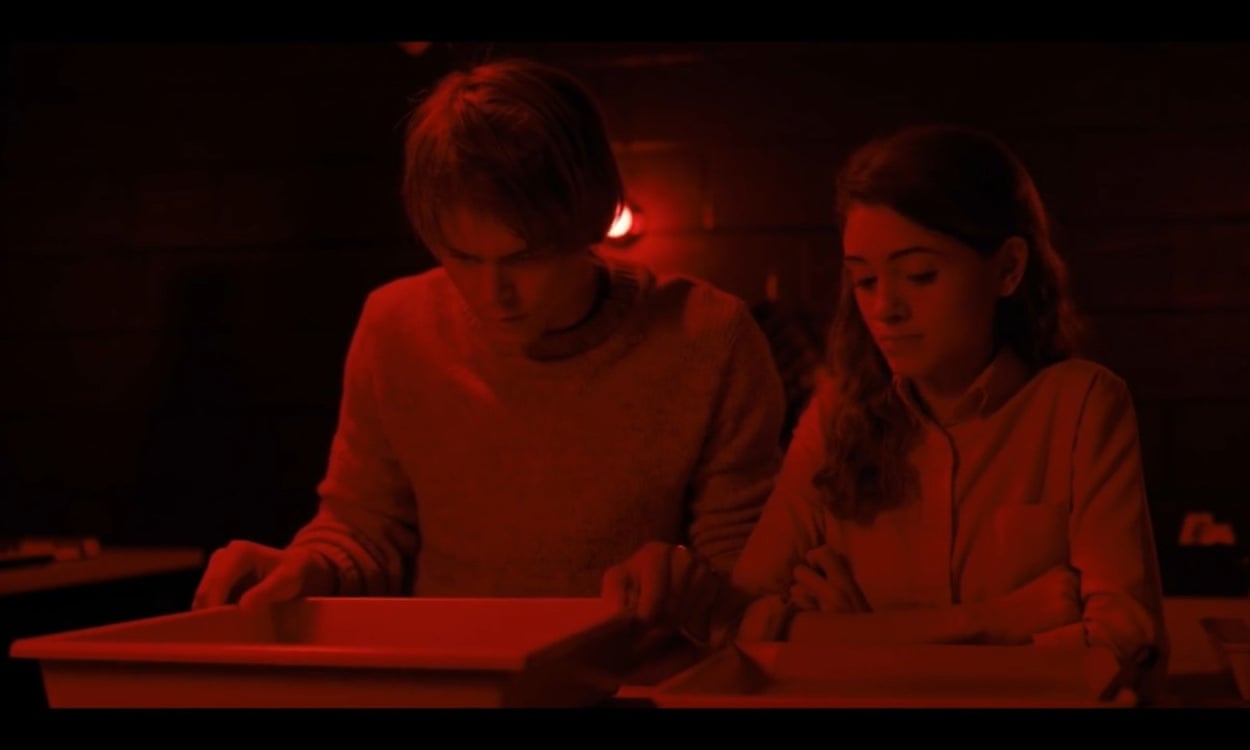
  1. Multiple viewers of Stranger Things season three don’t understand that Jonathan is working in a photography darkroom. (See header image.)
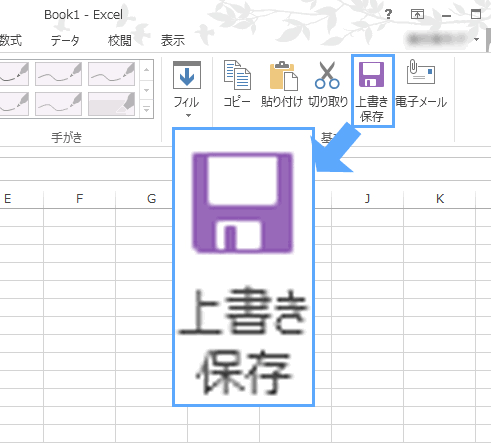
  2. This one was meant to happen, the 3.5" floppy disk used as the icon do save documents. “Why is the save icon a vending machine.”

https://twitter.com/craigmod/status/1160399005869903873 Image

There are so many ways a book can be in the world

Robin Sloan in his newsletter, writing about some of the fantastic ways his writing has been remixed. I loved these two quotes.

There are so many ways a book can be in the world, so many things it can become. A meal. A play performed once and only once by a crew of irrepressible young actors! To imagine that every book must become a Netflix show doesn’t imagine enough, and, frankly, it serves Netflix far more than it serves readers, or writers, or witches.

And:

A record can play in an empty room; a Netflix show can stream while its presumed viewers are otherwise absorbed by their phones. Words, however, cannot do anything without a reader. This is the great consolation, and the great confidence, of writing: that these words I’m typing (now) are being reanimated in a living mind (now).

Source: ☄️ Week 33, add oil | ☄️ Week 33, add oil

Cayce and Case

[H]aving moved on to a reread of Neuromancer, I am trying hard to image what it must have been to read the book with fresh eyes in 1984 — back before there was much of a “consensual hallucination” between hardware and through networks. That novel has been so absorbed by the culture, especially the internet-centric culture we have now; it’s like trying to assess the merits of something like Citizen Kane.

Source: Cayce and Case

The Mediation Layer Battleground

Copying this thread by Michael Nielsen. Interesting line of thought by Cory Doctorow. — "In 2012 I participated in a small group discussion led by @doctorow. I chanced into it, but he painted a picture I’ve thought about often in the years since, and that has changed the way I see the world. What follows is not literally @doctorow’s words, but rather the ideas as they appear refracted through my memory and further reflection. He reminded us of what was by then becoming Silicon Valley conventional wisdom, almost certainly correct, that software is eating the world. That is, over time, more & more of the objects & systems in our world are having a software layer added. We no longer directly control them; rather their behaviour is mediated. This gives us extra capabilities, but also means a loss of control, ceding it to the software layer You know the story: books are becoming mediated by a software layer. Cars are being mediated by a software layer. Home appliances. Even our bodies. So too at a higher level, the systems that run our world: housing, transit, conversation (hi @jack! ), democracy, and almost every other human system. Eventually it seems likely that everything from the tiniest objects to the largest systems will be mediated by a complex ecology of software. What @doctorow pointed out is that that mediation layer is an absolute, full-on battleground. It’s a battleground of all the governments of the world. Companies. Not-for-profits. Activists. Black-hat hackers. White-hat hackers. Etcetera etcetera etcetera. Over time, invisible to most users, that battle is becoming fiercer & fiercer & fiercer, as the stakes rise & rise. And because this mediation layer increasingly runs our lives, it has many of the characteristics of both law and infrastructure. But it’s law and infrastructure subject to an increasingly fierce, ongoing, invisible battle by a multitude of interests. We’ll all be subject to the outcomes of that battle in unexpected ways, ways that will be profound, sometimes big and obvious, sometimes very hard to detect until after the fact https://twitter.com/rdonoghue/status/1144011630197522432 Anyways, I think often of that mediation layer now, and the battle for control, and wonder how it will turn out, and how the outcome can be influenced. It seems likely that figuring out the principles & protocols of governance for this mediation layer will be one of the great challenges of the 21st century, a challenge much like figuring out the principles underlying, say, the US constitution. Encouragingly, it seems like wisdom & deep thought can make a big difference. Ideas like freedom of speech, separation of powers, & religious freedom aren’t obvious; they were invented by brilliant, humane people. I wonder what similar depth of thought can help achieve today?"
Thought Partnerships

Just in case you are one of the very few people still using RSS (like me!), I plan on writing a few articles on the topic of Thought Partnership, which is the way I frame my consultancy and strategy work. I’ll be posting those on the Sentiers website, the first one is here.

A Thought Partner is someone who, through a practice of researching, reading, learning, asking questions, and writing, helps partners in developing their ideas , knowledge, and thinking.

By the way, I also rewrote and added some details about how you can support the production of Sentiers by becoming a  patron.

Austin Kleon — I believe that the phrase ‘obligatory reading’ is...

I believe that the phrase ‘obligatory reading’ is a contradiction in terms; reading should not be obligatory… If a book bores you, leave it; don’t read it because it is famous, don’t read it because it is modern, don’t read a book because it is old…. If a book is tedious to you, don’t read it; that book was not written for you. Reading should be a form of happiness, so I would advise all possible readers of my last will and testament—which I do not plan to write—I would advise them to read a lot, and not to get intimidated by writer’s reputations, to continue to look for personal happiness, personal enjoyment. It is the only way to read.

Jorge Luis Borges

Source: Austin Kleon — I believe that the phrase ‘obligatory reading’ is… — From Kleon’s two excellent archives. Unschooling on Tumblr and learning on his blog.

Le plan Ferrandez

Je suis extrêmement triste que mon maire ai décidé de démissionner, j’espère que le prochain candidat nous permettra de continuer «l’oeuvre» entamée sur le Plateau et j’ai bien hâte de voir les prochaines étapes pour Mr. Ferrandez. Depuis son annonce, j’ai repensé à ce bout de texte presque à chaque jour. Comme il a publié la chose sur FBDM (Facebook de m…), et pour référence personnelle, je copie ici. Tout un menu, à la mesure du travail à faire.

Taxer 100% du stationnement sur rue et hors rue, taxer l’entrée au centre-ville, réinventer le camionnage en ville, taxer les investissements étrangers, taxer les déchets, lobbyer pour empêcher l’agrandissement de l’aéroport; pour faire taxer les vols aériens; pour limiter le développement des activités pétrolières du port, pour réintroduire les tarifs douaniers sur certains catégories de produits et pour taxer la viande. Avec ces revenus, il faut acquérir ou zoner tous les terrains verts encore disponibles, construire des centaines de fermes de permaculture, construire la ceinture verte autour de Montréal, agrandir les parcs, mettre en place un programme de décontamination par la phytorémédiation, déminéraliser 10% des rues, planter 500 000 arbres, acquérir et démolir les maisons en terrains inondables, renforcer les milieux humides, réinventer le recyclage et la consigne. Il faut aussi réinventer notre façon d’occuper le territoire, bloquer la spéculation au centre-ville en réduisant les hauteurs permises; concentrer nos efforts sur la densification à échelle humaine dans des coeurs de villages partout sur le territoire - notamment en forçant la délocalisation des emplois et la construction de logements pour les familles à grande échelle autour des parcs et des stations de métro. Ces constructions se feraient dans des immeubles à ossature de bois d’ici, avec des fenêtres qui ouvrent, à hauteur des rangées d’arbres plantés devant pour les tempérer. Finalement, et surtout, il faut concentrer nos investissements sur des objectifs environnementaux quitte à abandonner les immenses investissements prévus pour les routes mais aussi dans les nouvelles constructions prévues en sports, loisirs et culture.

Source: Luc Ferrandez - Amis et citoyens; amies et citoyennes, je… | Facebook